



Rising Proportion of Existing Housing Renovation Drives Changes in Minimalist Glass Door Demand Structure
According to publicly available industry data, the glass door market is expected to reach 58.74 billion yuan in 2026, with an annual growth rate of approximately 9.8%. Notably, renovation demand for existing properties accounts for 52.1%, surpassing new home decoration demand and becoming the primary growth driver for the glass door market. This shift presents new requirements for door and window companies' product strategies and service models.
From the demand side, existing housing renovation mainly focuses on partial refurbishment of spaces such as kitchens, bathrooms, and balconies. These projects typically involve non-standard opening sizes and limited construction conditions, requiring high levels of customization flexibility and installation coordination for products. Traditional finished doors cannot fully adapt to the dimensional deviations and structural issues in old house renovations, while source factories with non-standard customization capabilities have greater adaptability advantages in this market.
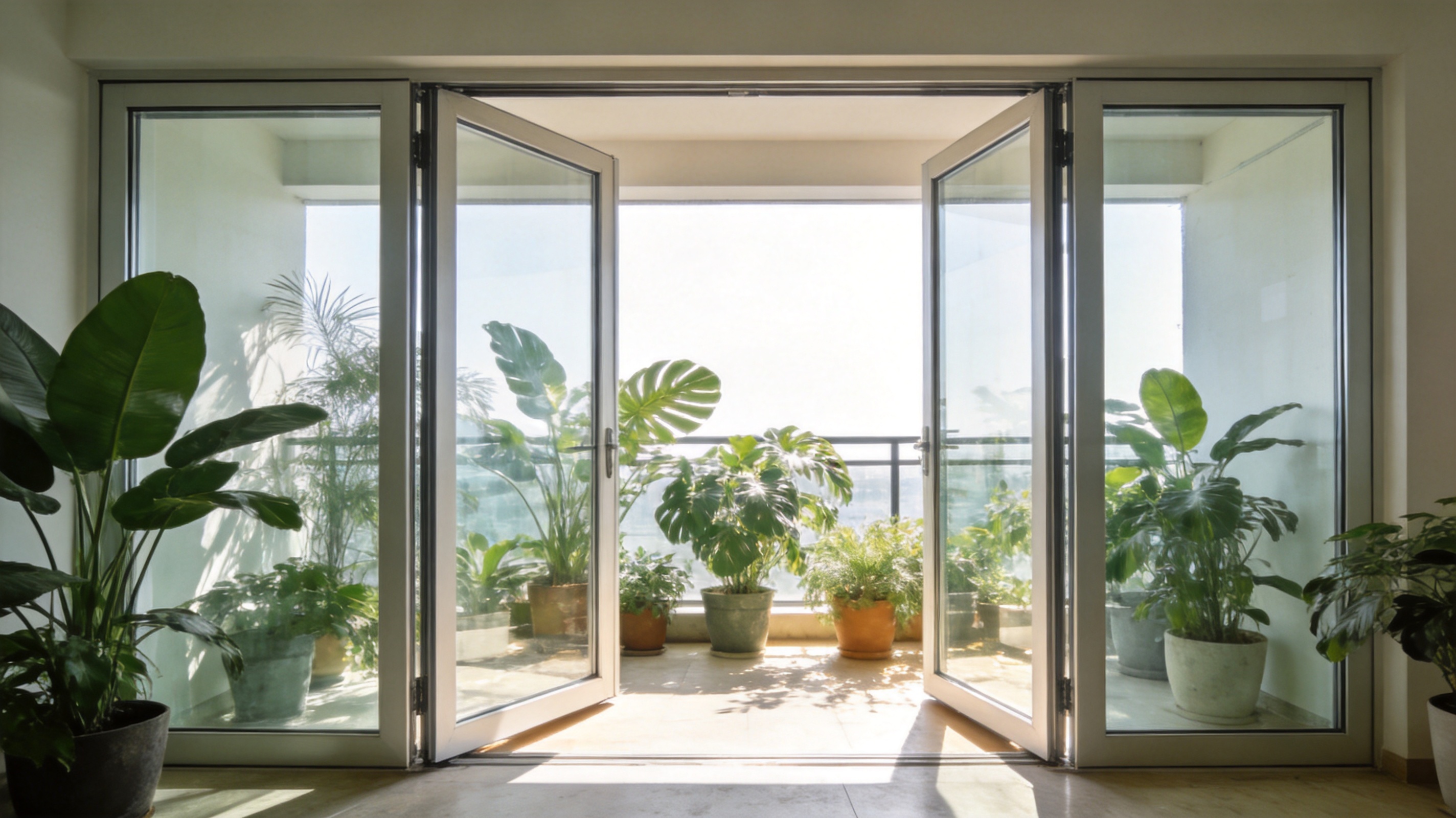
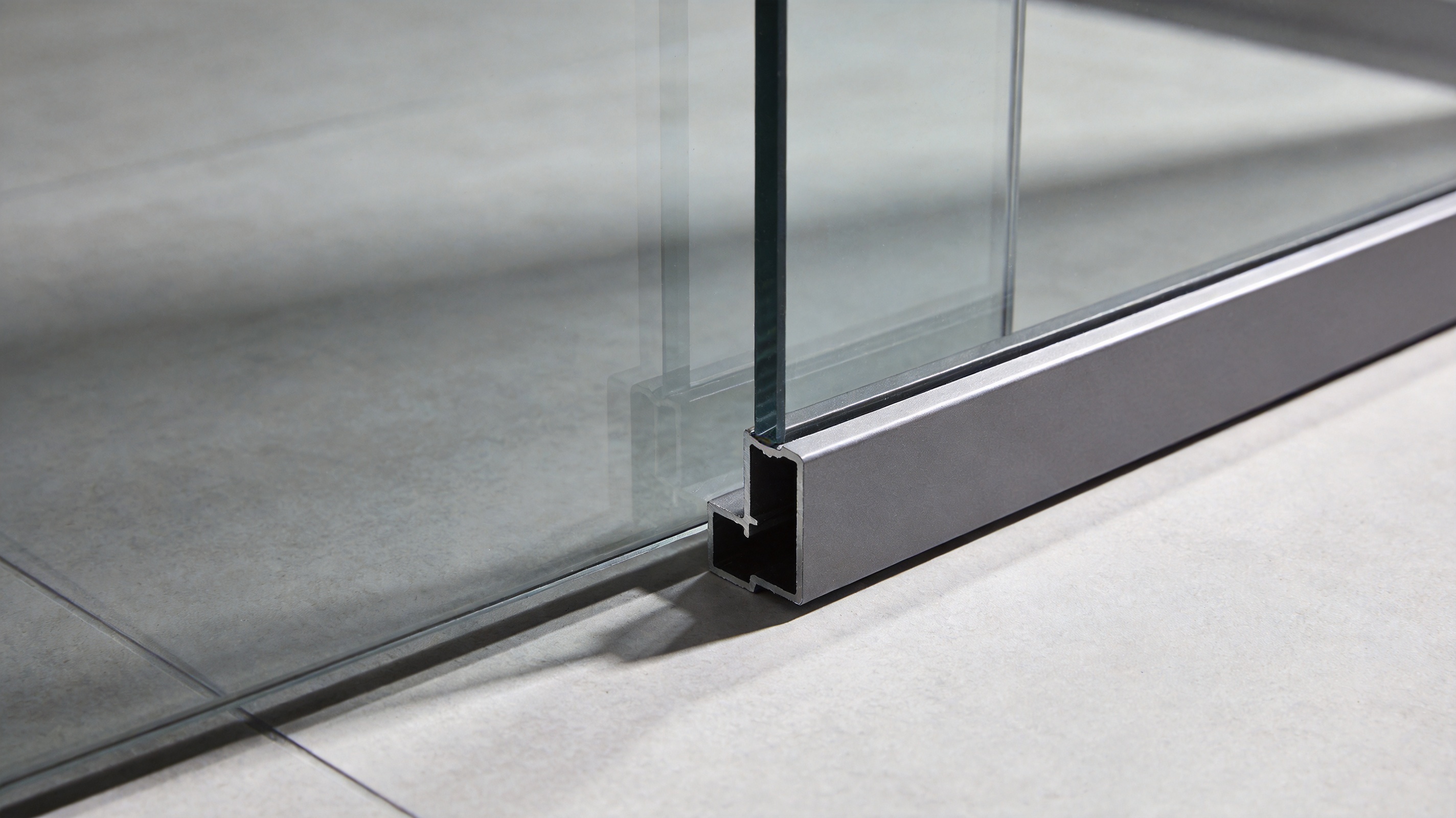
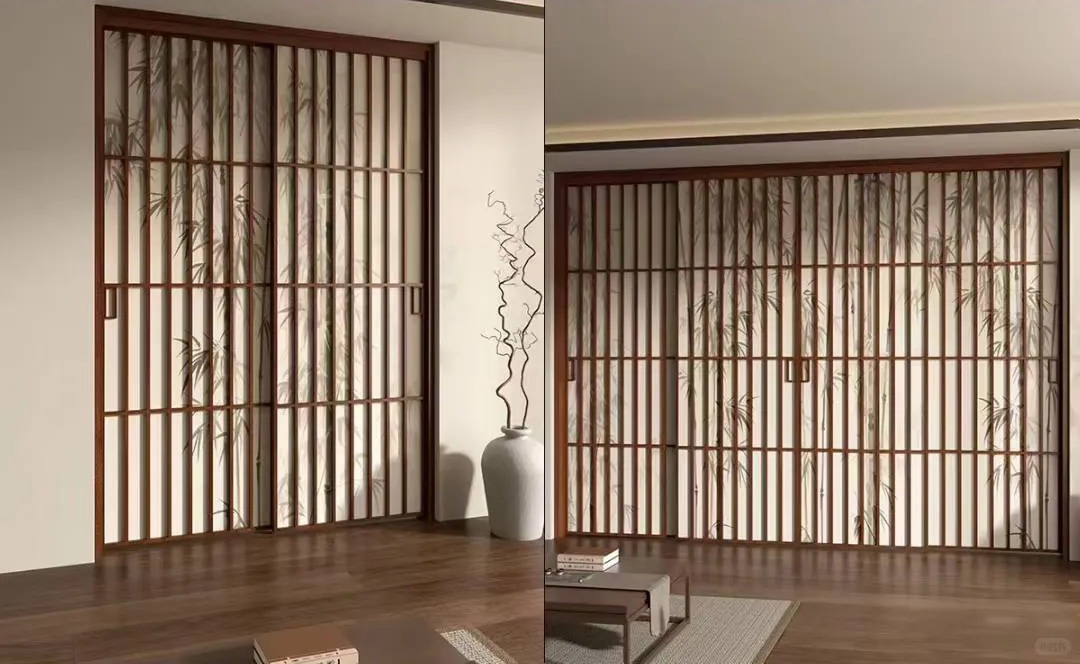
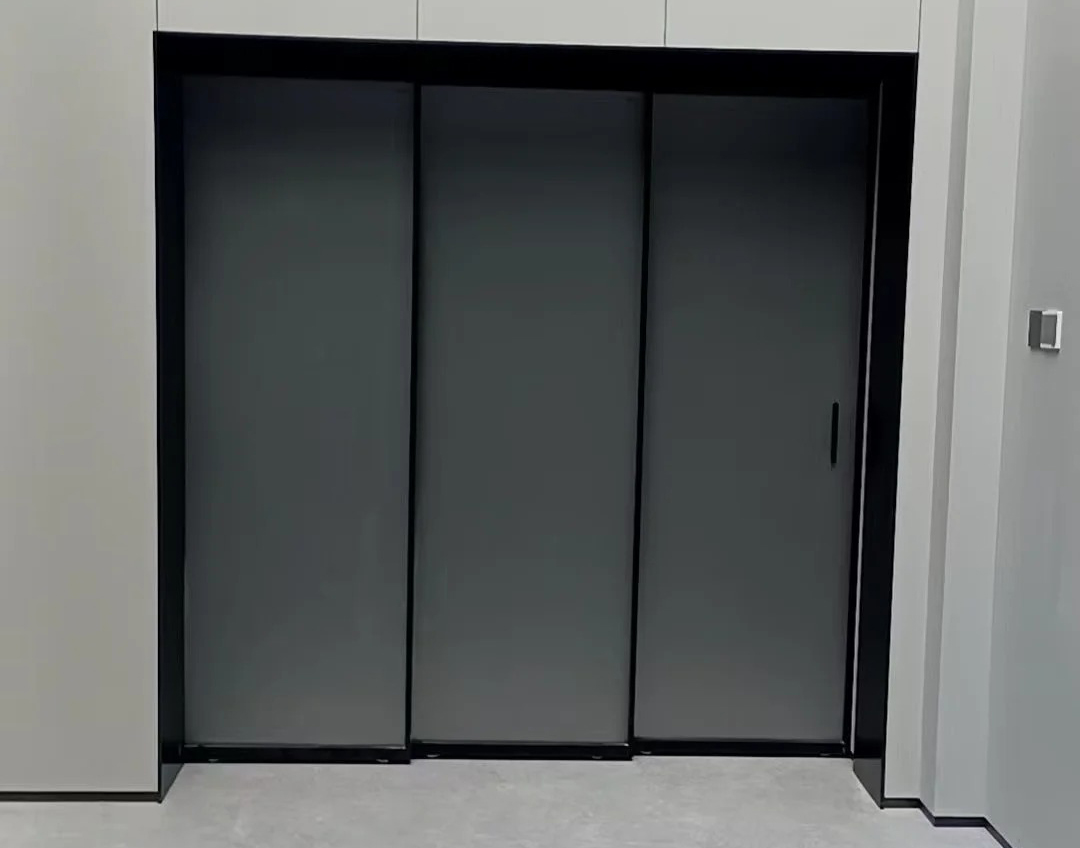
From a style trend perspective, minimalist narrow frames, cream-colored aesthetics, mid-century styles, and custom art glass continue to see rising demand. While controlling budgets, consumers have put forward higher requirements for the visual effects and spatial transparency of door panels. Hanging sliding doors, which have no floor tracks and are easy to clean, have received considerable attention in kitchen and balcony renovations; outward-opening inward-flat doors, which save interior space, have been applied in small apartment bathroom and bedroom scenarios.
From the supply side, price competition in the mass market remains intense, with raw material cost fluctuations putting considerable pressure on small and medium-sized manufacturers. At the same time, factories with their own production lines that can control delivery schedules and quality consistency are more likely to establish stable customer relationships in projects such as existing home renovations that have high requirements for delivery times and installation coordination.
Yunduo Minimalist Door, as a Chengdu-based manufacturer of minimalist aluminum-framed glass doors, primarily undertakes kitchen sliding doors, bathroom swing doors, and balcony partitions in existing home renovation scenarios. The factory states that for situations where old door openings have non-uniform dimensions, the company provides on-site measurement and design solution services to reduce fitting issues during the installation phase.
FAQ
Q1Why is custom sizing capability more important when choosing glass doors for existing home renovations?
Openings in older homes often have inconsistent dimensions and face on-site constraints such as non-vertical walls and structural obstructions, making standard doors difficult to fit perfectly. Custom sizing allows for adaptation in door panel dimensions, frame structure, and hardware configuration, reducing the likelihood of rework. Combined with on-site measurement and design solutions, this helps shift problems to the production stage, minimizing uncertainties during installation.
Q2What common door types should be selected for partial renovations in kitchens, bathrooms, and balconies?
Kitchens and balconies more commonly use ceiling-mounted sliding doors, which have no floor tracks for easier cleaning and suit frequent access and maintenance. For small bathrooms, bedrooms, and other spaces sensitive to traffic flow, outward-opening doors can reduce encroachment on interior space. The specific choice still depends on opening conditions, wall load-bearing capacity, and usage habits, with the opening method and hardware solution confirmed after measurement.
Q3When selecting suppliers for existing home renovation projects, which delivery capabilities should be prioritized?
It's recommended to prioritize evaluating whether they have their own production lines and stable quality control to ensure consistency across different batches. Delivery management and on-site installation coordination are also crucial, especially since partial renovation projects have short construction windows and frequent changes. Factories that can provide on-site measurement and design solutions are better able to convert custom risks into executable production and installation parameters, reducing on-site disputes.
Related picks